
Digital X-Ray Technology
Advanced Imaging With 80% Less Radiation

Safer, Faster Imaging
Digital X-rays produce high-resolution images in seconds while reducing radiation exposure by up to 80% compared to traditional film. Dr. Wei can display your images chairside, zooming in on areas of concern and walking you through findings in real time.
This technology helps us detect cavities, bone loss, infections, and developmental issues earlier—when treatment is simpler, less invasive, and more affordable.
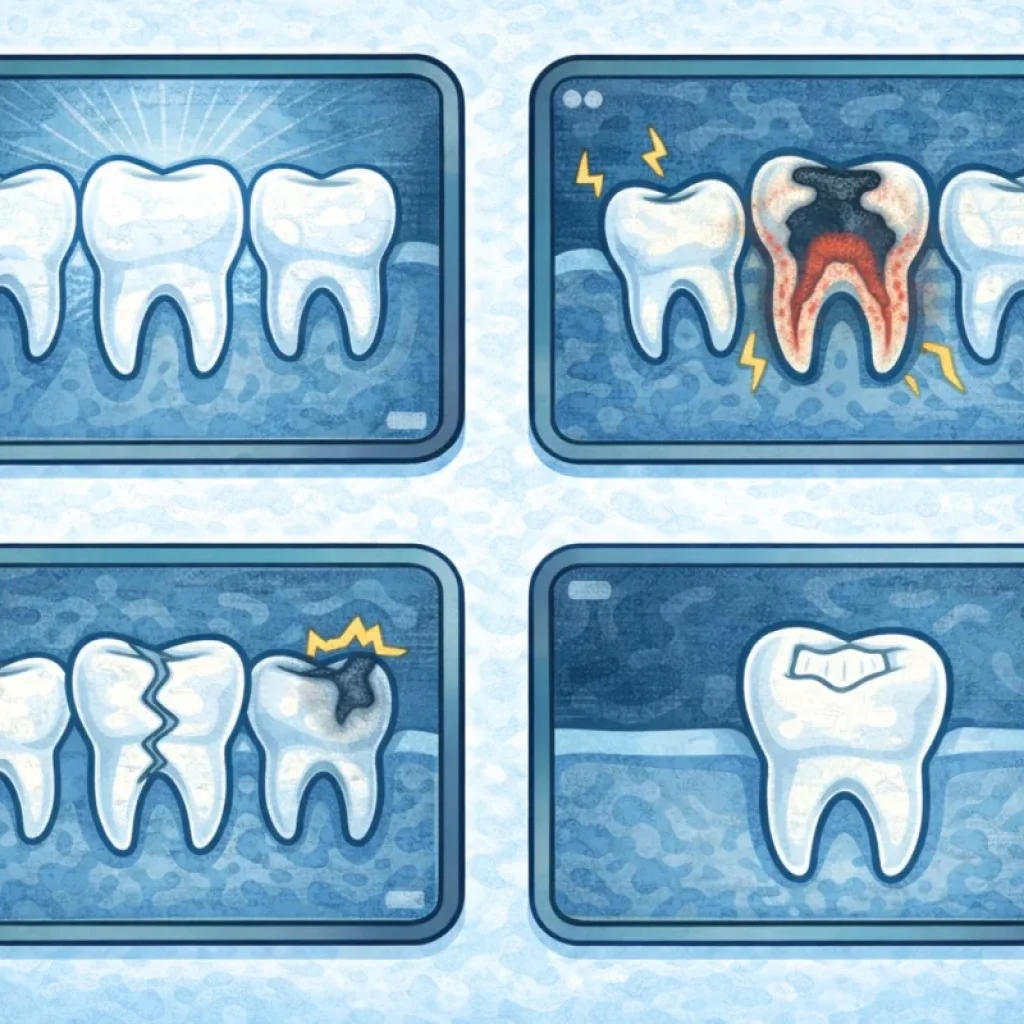
State-of-the-Art Digital Radiography in Nepean
At BluSky Dental Centrepointe, we use advanced digital radiography technology for all diagnostic dental imaging. This investment in cutting-edge equipment reflects our commitment to patient safety, diagnostic accuracy, and clinical excellence.
Digital X-rays have revolutionized dental diagnosis. Compared to traditional film radiography, digital imaging offers superior image quality, dramatically reduced radiation exposure, and instant results.
Radiation Safety: Patient safety is our top priority. Digital X-rays expose you to 80% less ionizing radiation than conventional film X-rays. This means diagnostic quality without unnecessary risk, making digital imaging ideal for all patients—including children and pregnant women.
Instant Diagnosis: Unlike film X-rays that require processing time, digital images appear on our computer screen within seconds. This allows us to immediately show you the image, explain findings, and discuss treatment options—improving communication and decision-making.
Enhanced Imaging: Digital images can be enlarged, highlighted, and enhanced to reveal pathology that might be invisible on conventional X-rays. We can adjust contrast and brightness to optimize visualization of subtle bone loss, cavities, and other dental problems.
Easy Documentation: Digital images are stored electronically and integrated into your patient file. This provides seamless records that follow you if you transfer care, and eliminates the space needed for physical film storage.
Environmentally Responsible: Digital radiography eliminates the chemical processing required for film X-rays, reducing environmental impact and chemical disposal.
Types of Digital Imaging We Offer:
Intraoral X-Rays: Detailed images of individual teeth and surrounding bone, taken with a small sensor placed inside your mouth.
Panoramic X-Rays: Complete view of your entire jaw, all teeth, and temporomandibular joints in a single image.
Cone Beam CT (CBCT): Three-dimensional volumetric imaging for complex cases requiring precise anatomical visualization—ideal for implant planning, orthognathic surgery assessment, and evaluation of complex jaw pathology.
Bitewings: Images of upper and lower teeth in occlusion, used to detect cavities between teeth and assess bone loss around implants and natural teeth.
Occlusal Views: Images of the roof or floor of your mouth, useful for detecting smaller objects, bone fractures, and assessing tooth eruption patterns.
Each imaging type provides specific diagnostic information. Our dentists select the appropriate imaging method based on your clinical needs—using the "as low as reasonably achievable" (ALARA) principle to minimize radiation while obtaining necessary diagnostic information.
Modern Imaging Improves Diagnosis & Treatment Outcomes
Digital X-rays allow us to detect problems earlier and plan better treatment. Plus, 80% less radiation exposure.
Digital X-Ray Questions
Yes, dental X-rays are extremely safe. Digital X-rays use 80% less radiation than film. The radiation dose is minimal and comparable to your natural background radiation exposure. Protective lead aprons further reduce exposure.
Frequency depends on your individual risk. Patients with low cavity risk and healthy gums may need X-rays every 24 months. Patients with cavities, gum disease, or other risk factors may need X-rays annually or more frequently.
Yes. Digital X-rays with protective lead aprons are safe during pregnancy. However, we typically defer non-emergency X-rays until after your first trimester unless diagnostically necessary.
Yes. The lead apron blocks radiation from reaching your thyroid, chest, and abdomen. We use protective aprons for every patient during radiographic imaging.
A panoramic X-ray is a single image showing your entire jaw, all teeth, and temporomandibular joints. It provides a broad overview and is useful for detecting bone loss, impacted teeth, and jaw pathology.
A cone beam computed tomography (CBCT) scan creates a three-dimensional image of your jaw and teeth. It's more detailed than traditional X-rays and is especially useful for implant planning and surgical cases.
What Patients Say About Our Technology
Patients feel reassured by the low-radiation digital imaging and appreciate being able to see their X-rays on screen during their visit.
See all reviews on GoogleExcellent dentist and staff using the latest in dental technology . Friendly too !
Dental hygiene visit went well. Latest technology and knowledgeable hygienist.
Experience Advanced Dental Imaging
BluSky Dental Centrepointe uses state-of-the-art digital radiography for safe, accurate diagnosis. Schedule your appointment today.

Learn More About Our Technology
Call BluSky Dental Centrepointe at (613) 224-8600 or request an appointment online.
Call: (613) 224-8600
Advanced Technology. Superior Diagnosis. Safe Care.