
Dental Bridges
Fill the Gap, Restore Your Smile

A dental bridge literally bridges the gap left by one or more missing teeth. The bridge consists of artificial teeth anchored to your natural teeth on either side of the space. Bridges restore your ability to eat and speak clearly, maintain proper bite alignment, and fill the gap in your smile with a natural-looking restoration.
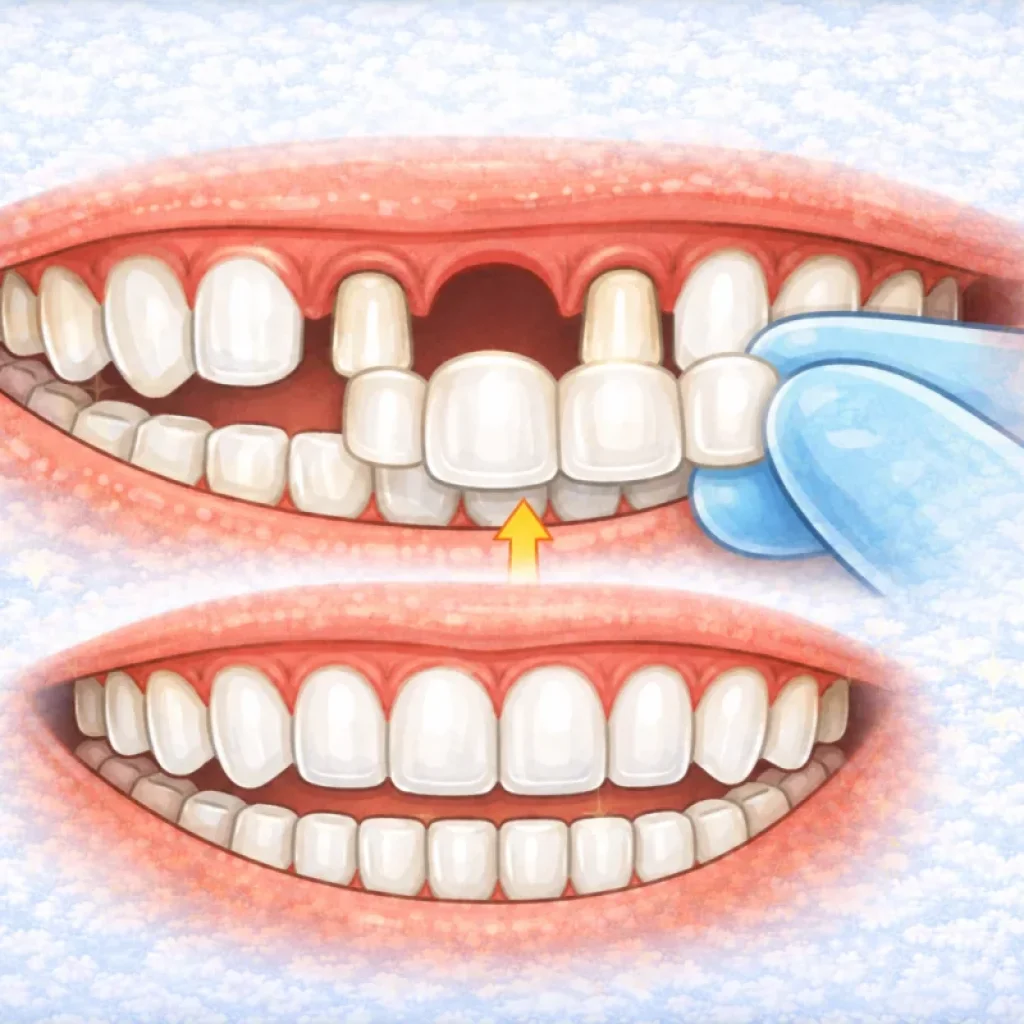
How Dental Bridges Work
Missing teeth don't just affect your appearance—they compromise function and cause long-term problems. When a tooth is missing, the surrounding teeth shift, your bite changes, and your bone begins to deteriorate. A bridge prevents these complications by maintaining tooth position and restoring function.
A dental bridge consists of two main parts: the crowns on either side (called abutments) and the artificial tooth (called a pontic) that fills the space. The abutment teeth are prepared and crowned, and the artificial tooth is fused between them. The result is a strong, natural-looking replacement that feels like your own teeth.
Bridges work best when you have healthy teeth on either side of the gap. These anchor teeth must be strong enough to support the bridge. If anchor teeth are weak or missing, an implant or partial denture might be a better option.
We offer several bridge types. Traditional bridges use porcelain-fused-to-metal or all-ceramic crowns. Cantilever bridges have an abutment on only one side (used when there's no tooth on one side). Maryland bridges use a metal wing bonded to the back of adjacent teeth (less preparation, good for certain situations).
The bridge process is similar to getting crowns. We prepare the anchor teeth, take impressions, and place a temporary bridge. Your permanent bridge is fabricated at our lab and cemented at a second appointment. The entire process takes 1-2 weeks.
One advantage of bridges is speed compared to implants. Bridges are completed in weeks, while implants require 3-6 months. Bridges are also less expensive than implants. However, implants have advantages too—they don't require grinding down healthy teeth and can last even longer.
Proper care is essential for bridge longevity. You need to floss under and around the pontic daily to prevent decay and gum disease. With excellent care, bridges last 10-15 years or longer.
Bridges vs. Implants vs. Dentures
Bridges: Affordable, fast, work if you have strong adjacent teeth. Implants: Standalone, preserve bone, last longest, but take months and cost more. Dentures: Replace many teeth, removable, most affordable for extensive loss. Each has pros and cons for different situations.
Dental Bridge Questions
A well-maintained bridge typically lasts 10-15 years. Some last 20+ years with excellent care. Longevity depends on the material, your oral hygiene, and how hard you chew. The anchor teeth need to stay healthy for the bridge to remain stable.
Yes, some tooth structure must be removed to prepare the abutment teeth for crowns. This is a tradeoff—you lose a small amount of healthy tooth to replace a missing tooth. If you're uncomfortable with this, implants are an alternative that don't require grinding adjacent teeth.
Yes. If a bridge fails due to decay, breakage, or poor fit, we can make a new bridge. If the abutment teeth have deteriorated significantly, we might recommend implants or dentures instead. We'll evaluate the situation and discuss options.
Flossing under a bridge requires a floss threader or special bridge floss. You thread floss under the pontic and gently floss the sides and underside. This removes plaque and prevents decay under the bridge. We'll show you the technique during placement.
A traditional bridge requires teeth on both sides. If you're missing the back tooth, we can use a cantilever bridge (anchored on one side only) or recommend an implant, which works great as a standalone replacement.
Bridges are durable, but the porcelain can chip if you bite something very hard. The bridge won't fall out, but you should have it repaired quickly to prevent decay. The underlying cement is protected by the porcelain, so small chips aren't urgent, but larger breaks need attention.
A bridge replacing one tooth typically costs $2000-$4000 (two crowns and one pontic at $800-$1500 each). Bridges replacing multiple teeth cost proportionally more. Dental insurance often covers 50% of bridge costs. We discuss pricing upfront and offer payment plans.
What Patients Say About Dental Bridges
Patients appreciate the restored function and natural appearance of their bridgework, along with clear explanations throughout the process.
See all reviews on GoogleBluSky Dental Clinic was really great! From the receptionist to the dental assistant (Helen!) to Dr. Wei, I was treated so well, and put completely at ease! Highly recommended!
I have been going to Centerpoint dental since I was 7. It’s always been fantastic experience and work. They really treat you well. I definitely recommend this dental office!!
Close the Gap in Your Smile
Don't let a missing tooth affect your health and confidence. Schedule a bridge consultation at BluSky Dental Centrepointe.

Bridge Specialists in Nepean
BluSky Dental Centrepointe, 117 Centrepointe Dr #102, Nepean, ON K2G 5X3. Phone: (613) 224-8600. Restore missing teeth with bridges.
Bridges That Look and Feel Natural